Kitchen Mood Makeover Checklist: A Simple Plan to Shift the Feel of Your Space in Minutes
Kitchen mood changes fast—sometimes from clutter, harsh lighting, or a few “always there” items that quietly drain the vibe. A mood makeover doesn’t require a remodel. It requires a repeatable system: clear what’s visually loud, adjust the light, add one intentional accent, and keep the surfaces feeling open. Our Kitchen Mood Makeover Checklist is built for quick wins you can do in real life—before guests arrive, between work calls, or whenever the kitchen starts feeling heavy.
What “kitchen mood” is (and what actually controls it)
Your kitchen’s mood is the immediate feeling you get when you walk in—calm, cozy, bright, or tense. A few controllable “levers” decide that feeling more than square footage or expensive upgrades.
- Light temperature and brightness: overhead glare can feel clinical; warmer, layered lighting reads inviting.
- Visual noise: crowded counters, mismatched packaging, and too many small items make the room feel tense.
- Color balance: one strong accent can energize; competing colors can feel chaotic.
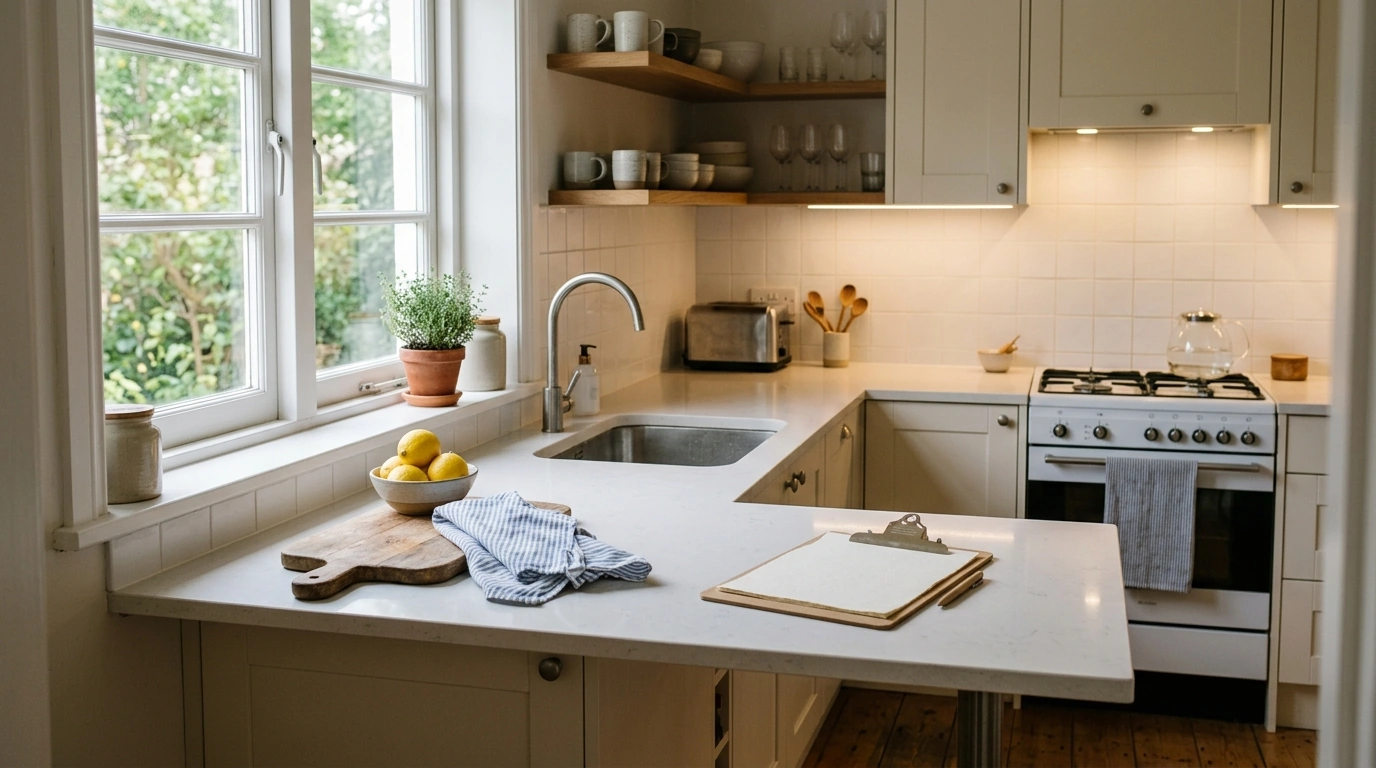
- Texture and softness: towels, a runner, wood, greenery, and matte finishes soften hard surfaces.
- Scent and air flow: stale air makes even a clean kitchen feel off; a fresh, light scent reads “reset.”
Fast mood levers and the quickest way to use them
| Mood lever |
Fastest change |
Best spot to focus |
| Lighting |
Switch on a warmer lamp or under-cabinet light; dim overhead if possible |
Sink zone + one corner (avoid all-top-light) |
| Counters |
Clear one “landing strip” and corral the rest in a tray |
Next to stove + next to coffee/tea area |
| Color |
Add one intentional accent color (towel, flowers, fruit bowl) |
Center of the room or the spot seen from the doorway |
| Texture |
Swap in one soft or natural element (linen towel, wood board, small plant) |
Near the sink or on an open shelf |
| Scent/air |
Ventilate for 5 minutes; use a gentle kitchen-safe scent |
By the sink/trash area |
If you want a quick primer on lighting choices (including color characteristics), the U.S. Department of Energy has a helpful overview of LED lighting basics. For the “fresh air first” approach, the EPA’s guidance on indoor air quality and ventilation is a solid reference.
How to use the Kitchen Mood Makeover Checklist (without turning it into a project)
The point of a checklist is to remove decision fatigue. You’re not “starting a kitchen overhaul”—you’re following a short order of operations that reliably shifts the feel.
- Keep one copy visible (fridge, pantry door) or store it on a clipboard in a drawer for quick resets.
- Choose one target mood before you begin: cozy, bright, calm, or “company-ready.”
- Work in passes instead of perfection: (1) clear surfaces, (2) adjust light, (3) add one mood accent, (4) finish with scent and a final wipe.
- Use it as a timer-friendly guide: stop after 10 minutes if that’s what the day allows—the kitchen will still feel different.
- Repeat the same order each time so the kitchen naturally stays closer to your “good baseline.”
If you want the steps already laid out, our team made the Kitchen Mood Makeover Checklist (digital download) to be a grab-and-go routine you can reuse whenever the mood drifts.
Pick a mood, then follow the matching mini-plan
Cozy & warm
Soften the light (warm bulb or lamp), add a wood board or woven tray, swap in a textured towel, keep counters mostly clear, and choose a gentle scent (vanilla, citrus-spice, or unscented clean).
Bright & energized
Open blinds, wipe reflective surfaces, use one crisp color accent (white + one pop), corral clutter into a single container, and add something fresh (a lemon bowl or simple greenery).
Calm & minimal
Clear the doorway sightline first, remove extras from the backsplash zone, choose one neutral accent (stone, wood, white), and keep the sink empty. The “empty sink” rule does more for calm than almost anything else.
Fresh & clean
Ventilate first, take out trash/recycling, wipe sink and faucet, reset towels, and keep only one “pretty” item on the counter. (For scent safety basics, Cleveland Clinic’s overview of aromatherapy is a good general read.)
Two realistic reset routines: 10 minutes and 60 minutes
10-minute reset (daily or pre-guest)
60-minute reset (weekly)
Make the makeover stick: simple systems that keep the mood from drifting
If you keep a larger, hands-on tool on the counter (like a pasta or dumpling setup), the same rule applies: give it a dedicated “home” so it reads intentional, not leftover. A countertop tool like our Household Manual Noodles Machine Commercial Dumpling Skin Maker can be part of a charming cooking zone—when it’s paired with a tray, a towel, and clear space around it.
Printing and reusing tips for a truly “grab-and-go” guide
FAQ
What’s the fastest way to change the mood of a kitchen without buying anything?
Do three moves: clear one counter zone completely, switch lighting to warmer/lower glare (or use a lamp), and reset the sink area with an empty sink and a fresh towel. Finish with five minutes of ventilation.
How many decor items should stay on the counter for a calmer feel?
Aim for one intentional accent plus one functional beauty item (like a wood board). Everything else should be stored or contained on a single tray to reduce visual noise.
Is this checklist better for daily resets or occasional makeovers?
It works for both: use it as a 10-minute daily reset when the kitchen feels off, and as a longer weekly refresh by completing more sections and refining zones.
Recommended for you











Leave a comment